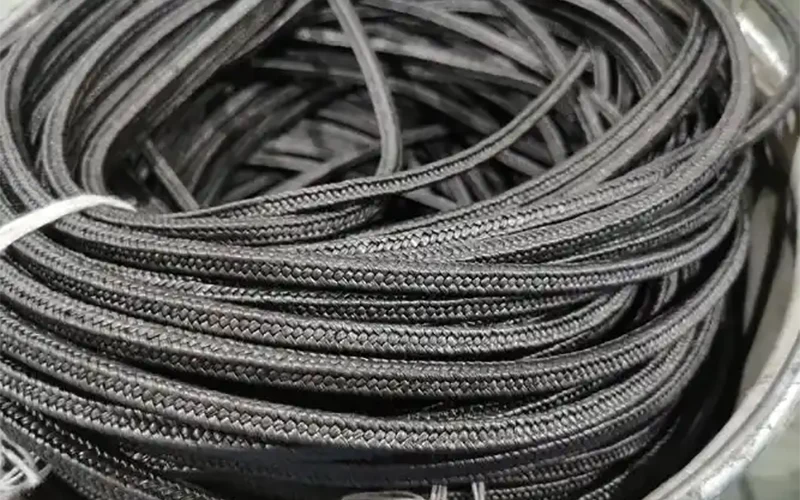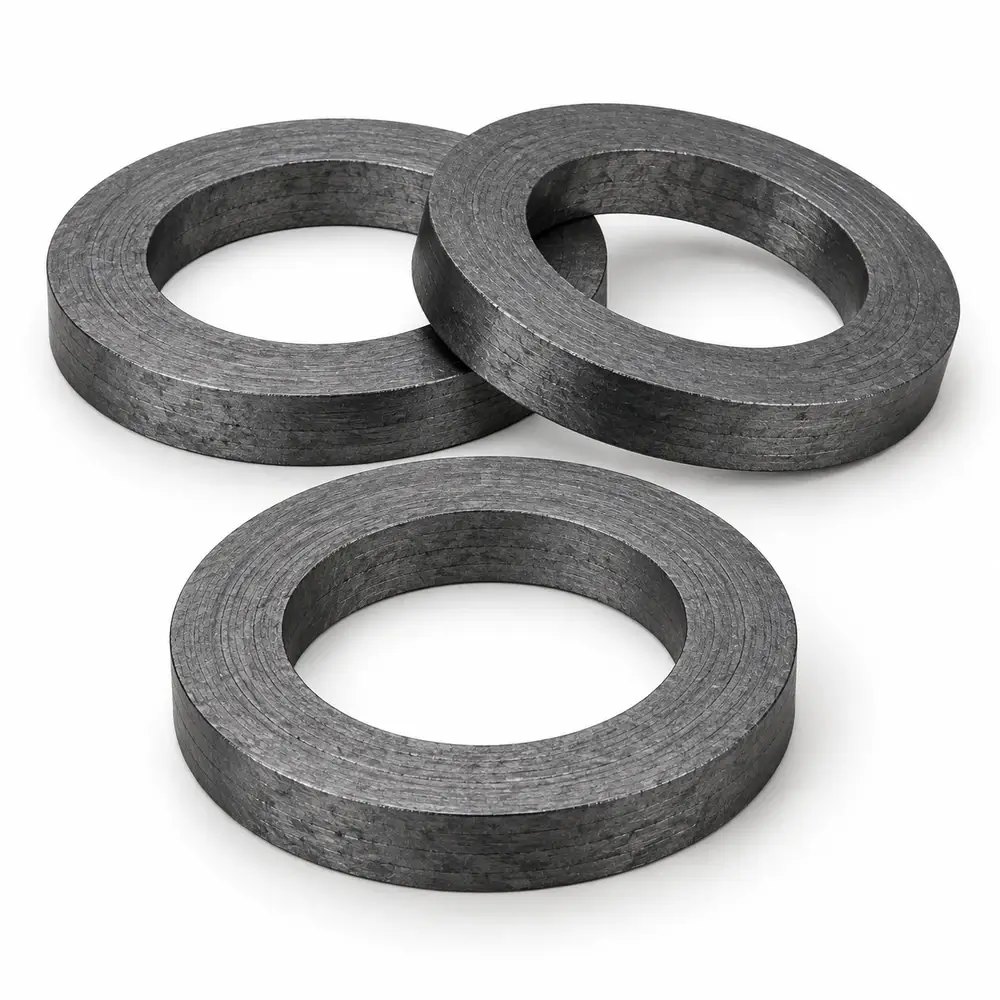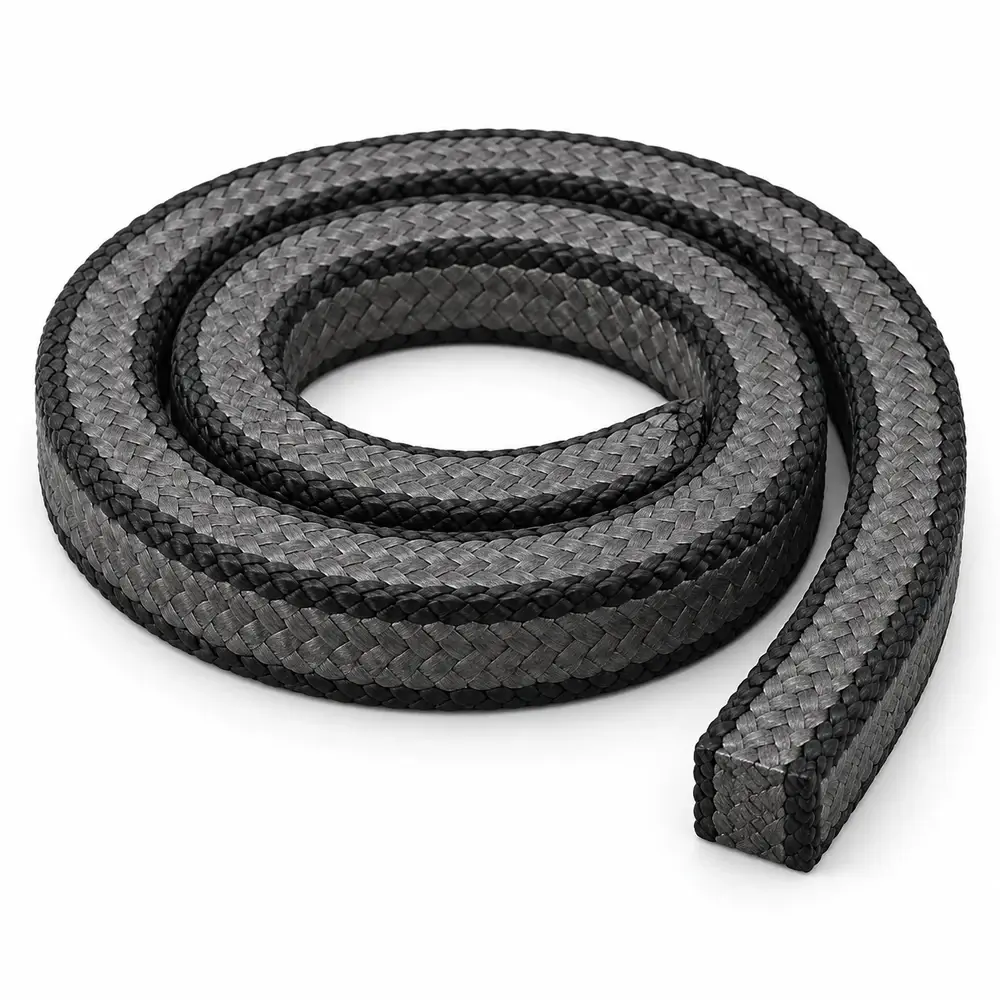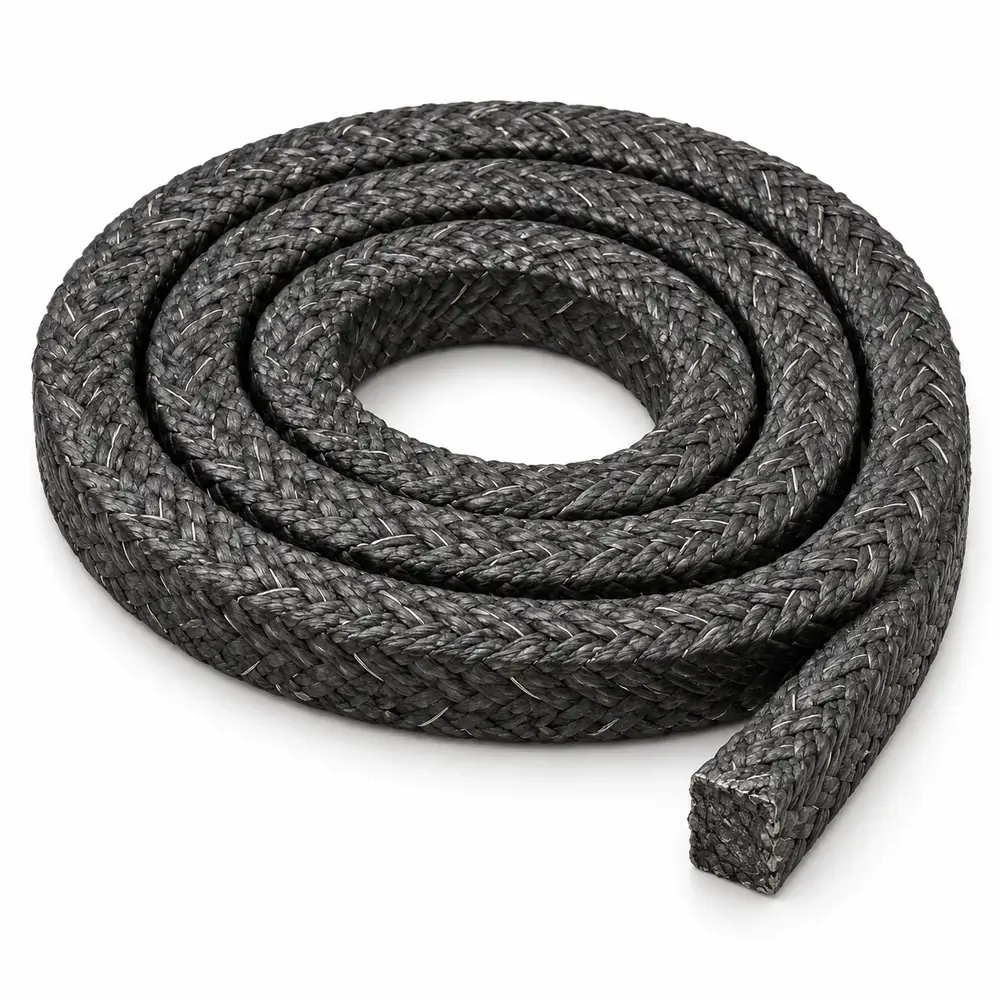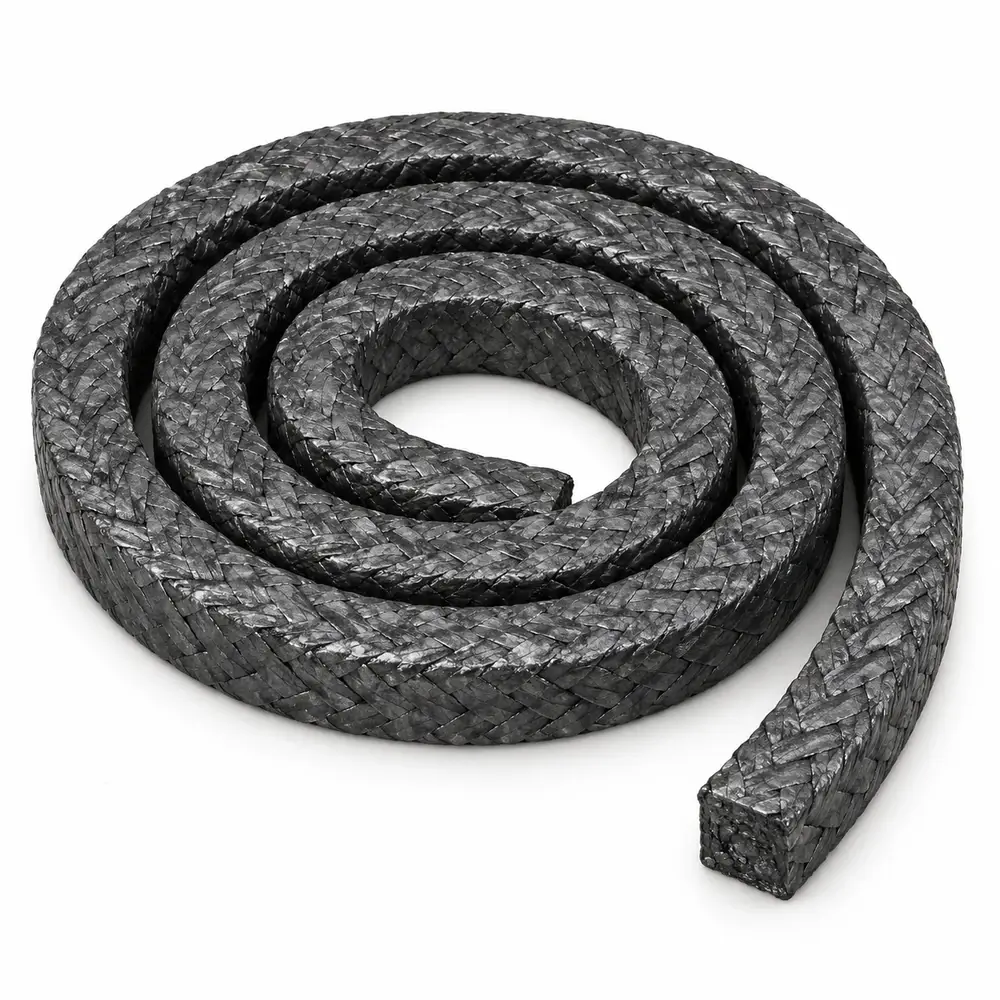
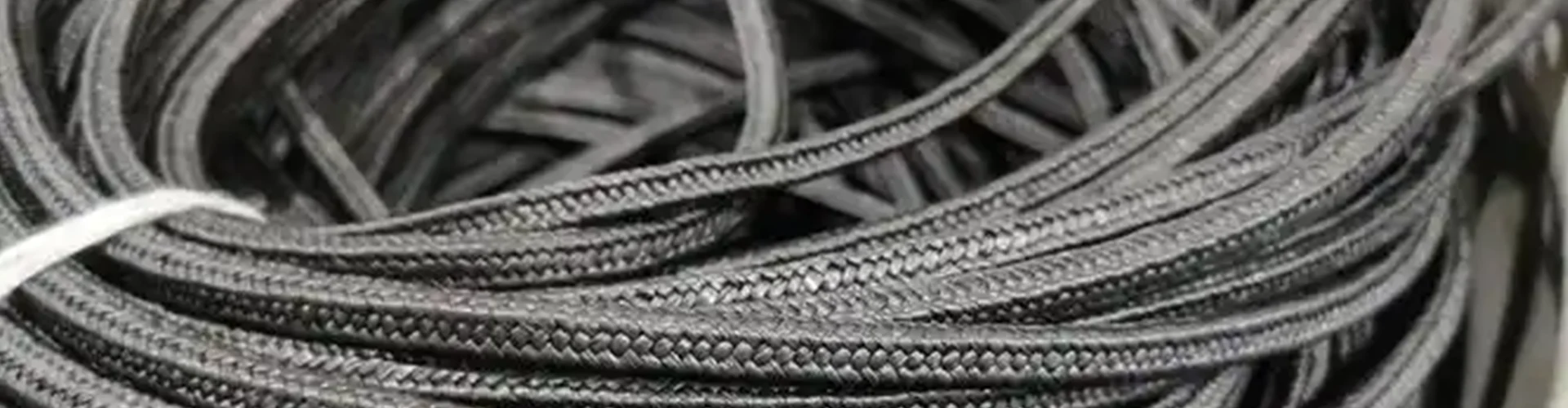
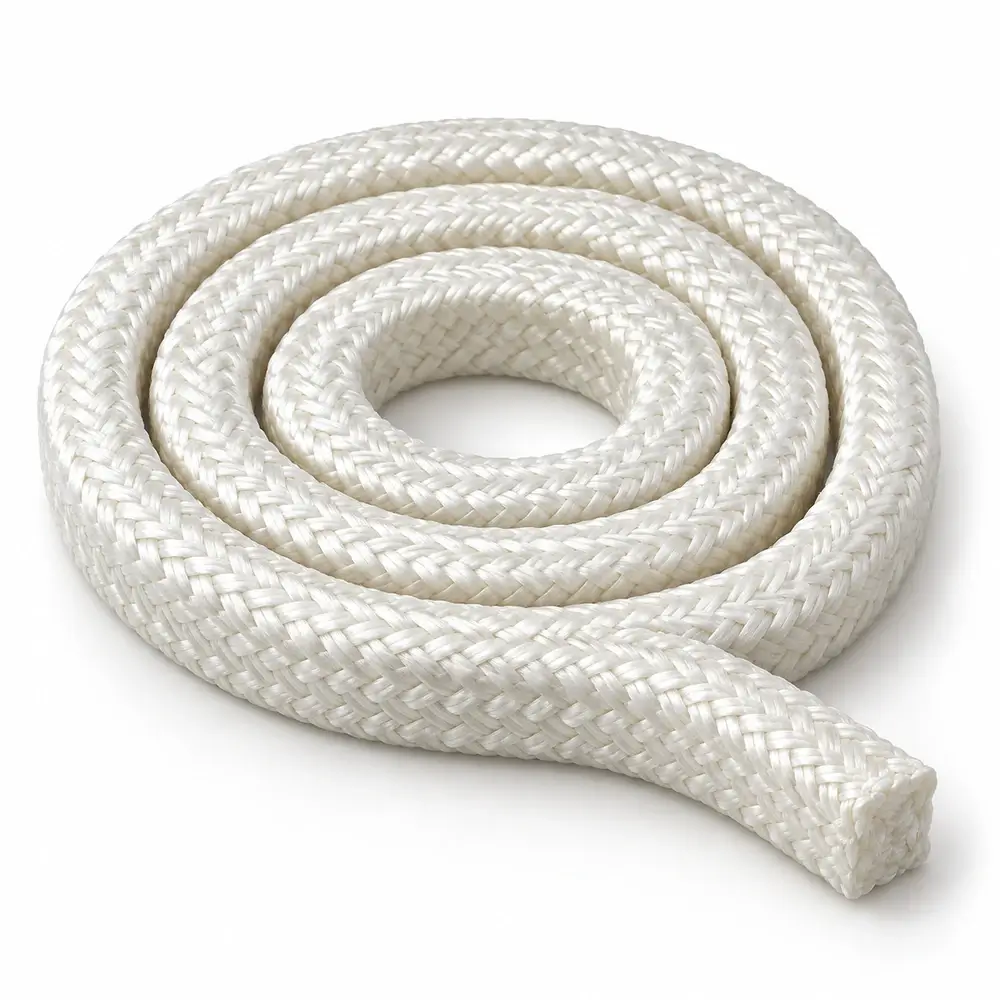
Square braided from texturized glass fiber yarns and supplied in three treatments: no impregnation, graphite emulsion, and PTFE double impregnation. High strength, high temperature resistance, low density, low thermal conductivity, good insulation and non-flammable — built for static seals in containers, heaters, manholes, lid covers and pipes.
KXT6100 · KXT6100G · KXT6100P
KXT6100 Plain · No impregnation
Square braided from texturized glass fiber yarns without any impregnation.
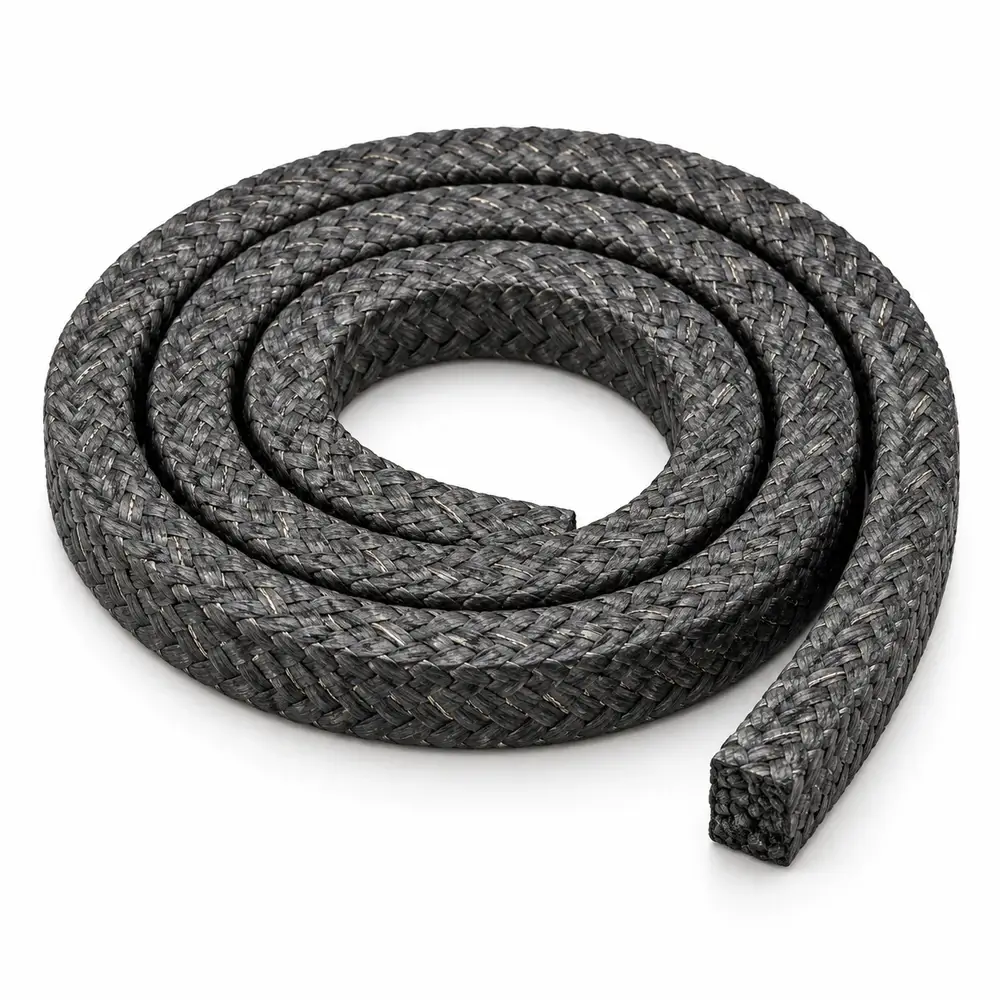
KXT6100G Graphite emulsion
Square braided from texturized glass fiber yarns and then treated with graphite emulsion.
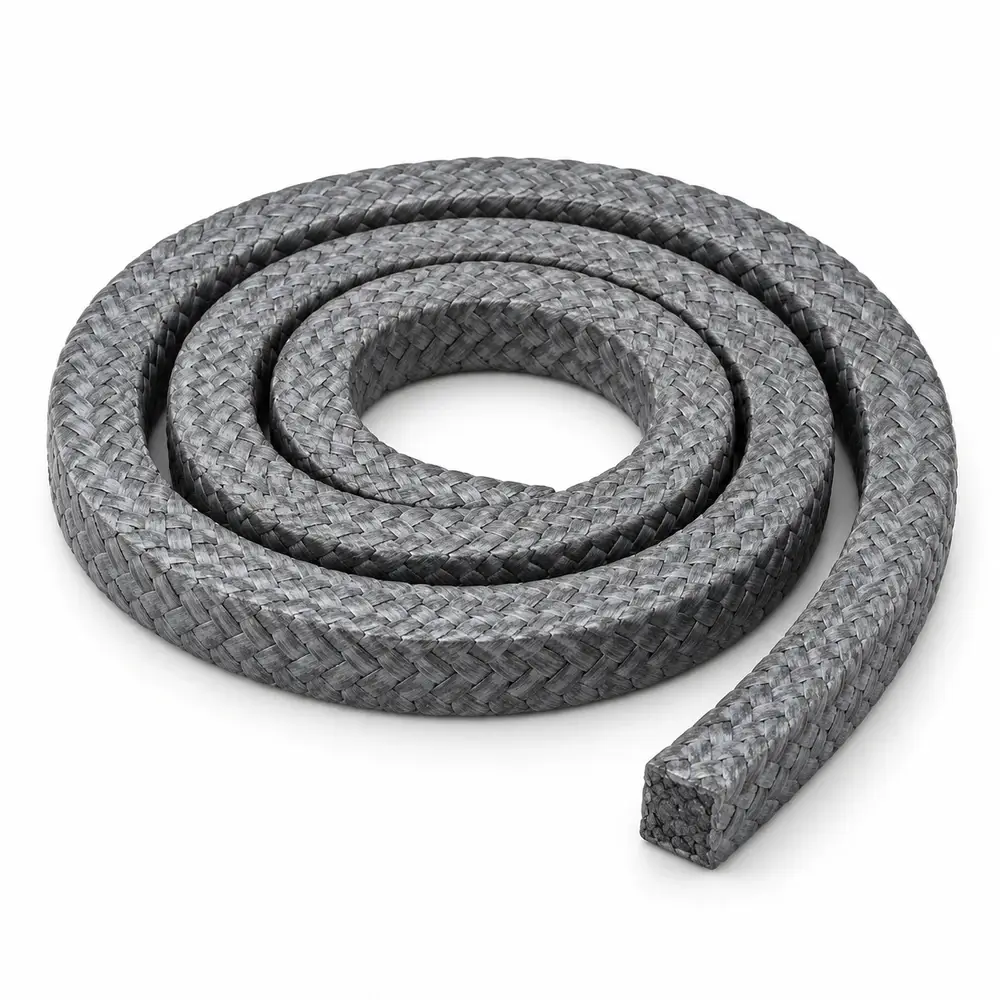
KXT6100P PTFE double impregnation
Square braided from glass fiber yarns pre-treated with PTFE emulsion. The packing is then re-impregnated with PTFE emulsion after braiding process. The PTFE impregnation increases the elasticity and sealing performance of the packing.
Compare plain KXT6100, graphite-treated KXT6100G and PTFE-impregnated KXT6100P by construction, medium and operating conditions. KXT6100 and KXT6100G list 450–550 °C; KXT6100P lists 280 °C.
Glass fiber packing may replace asbestos-based packing in suitable static applications. Confirm the dimensions, medium, temperature and sealing requirements before substitution.
KXT6100 is braided without any impregnation — the grade to specify where dimensional stability and a dry braid matter. KXT6100G is then treated with graphite emulsion, for applications requiring graphite-treated construction. KXT6100P is pre-treated with PTFE emulsion and re-impregnated after braiding, which increases elasticity and sealing performance — but the PTFE content also lowers the temperature ceiling to 280 °C.
The supplied specifications list 450–550 °C for KXT6100 and KXT6100G, and 280 °C for KXT6100P. The conditions corresponding to 450–550 °C are not specified. Confirm the allowable continuous and peak temperatures for the actual duty before ordering. The listed pH range is 5–9; compatibility also depends on the medium, concentration and temperature.
Glass fiber packing sits inside the Fiberglass Packing family. For rope-form glass fiber used on lid covers and manhole grooves, compare Glass Fiber Rope; for higher-temperature ceramic duty compare Ceramic Fiber Packing; for graphite-based high-temperature duty compare Graphite Packing; and the full Gland Packing range covers the remaining pump and valve positions.
This packing is not suitable for hydrofluoric acid, hot phosphoric acid or wet hydrogen chloride. Request a compatibility review with the medium, concentration and temperature before selecting an alternative.
As a static seal, KXT6100 is widely used for heat insulation and fire prevention in containers, heaters, manholes, lid covers, pipes. Suitable for use in chemically neutral mediums, such as water, steam, air, oils, etc.
5 kgs or 10 kgs per roll, then 20 kgs in a woven bag or carton. Roll weight and bag or carton labelling are confirmed against the actual order.
Approximate dimensions at a reference density of 1.1 g/cm³. Actual length varies with density and dimensional tolerances.
| Size (mm) | Appr. m/kg | Appr. g/m | Kgs/coil |
|---|---|---|---|
| 5 | 36.4 | 27.5 | 5 |
| 6 | 25.3 | 39.6 | 5 |
| 8 | 14.2 | 70.4 | 5 |
| 10 | 9.1 | 110.0 | 5 |
| 12 | 6.3 | 158.4 | 5 |
| 14 | 4.6 | 215.6 | 5 |
| 15 | 4.0 | 247.5 | 5 |
| 16 | 3.6 | 281.6 | 5 |
| 18 | 2.8 | 356.4 | 5 |
| 20 | 2.3 | 440.0 | 10 |
| 25 | 1.5 | 687.5 | 10 |
Roll and bag weights for the standard packing.
KXT6100 is square braided from texturized glass fiber yarns without any impregnation . KXT6100G is square braided and then treated with graphite emulsion. KXT6100P is square braided from glass fiber yarns pre-treated with PTFE emulsion and re-impregnated after braiding, which increases elasticity and sealing performance.
KXT6100 and KXT6100G are rated to 450–550 °C. KXT6100P is rated to 280 °C because of its PTFE content — the PTFE impregnation improves elasticity and sealing performance but lowers the temperature ceiling. Buyers who need the full 450–550 °C range should select KXT6100 or KXT6100G.
Maximum temperature is 450 °C to 550 °C for KXT6100 and KXT6100G, and 280 °C for KXT6100P. pH range is 5–9 for all three grades.
Hydrofluoric acid, hot phosphoric acid and wet hydrogen chloride. Request a medium-specific compatibility review before selecting an alternative.
Glass fiber packing may replace asbestos-based packing in suitable static applications. Confirm the equipment requirements and grade-specific service limits before substitution.
5 kgs or 10 kgs per roll, then 20 kgs in a woven bag or carton. MOQ is quoted against the grade, section size and roll or bag quantity. Bulk pricing is a tiered quotation based on total weight, not a fixed list price.
Send the grade, square section size, total quantity, roll weight, medium, operating temperature and pressure, equipment application and destination. Include chemical concentration where relevant. Ask for sample availability and required documentation in the enquiry.
Include the maximum temperature, medium, and whether you need plain, graphited or PTFE-impregnated construction. Request confirmation of service limits, MOQ, lead time, payment and shipping terms for the actual order.
Address
No 432 Zhenhai Middle Road, Luotuo Street, Zhenhai District, Ningbo City, Zhejiang China