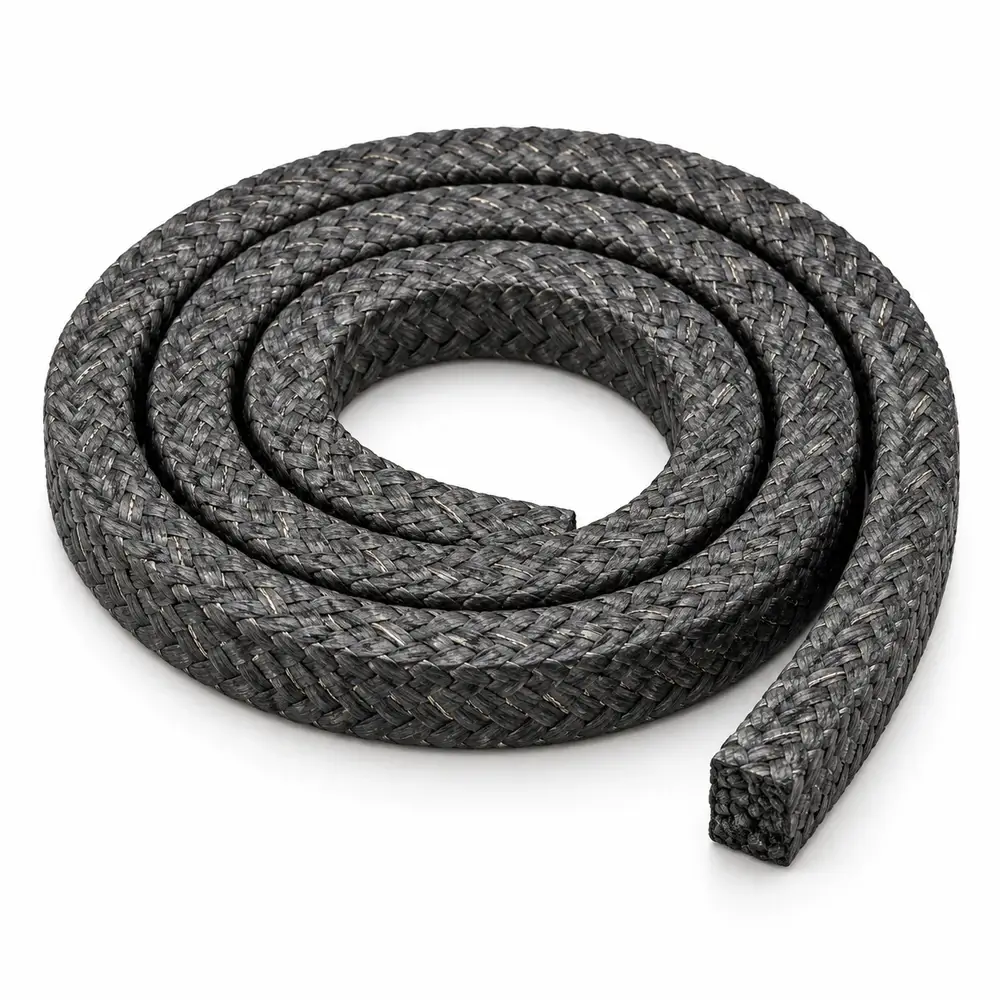
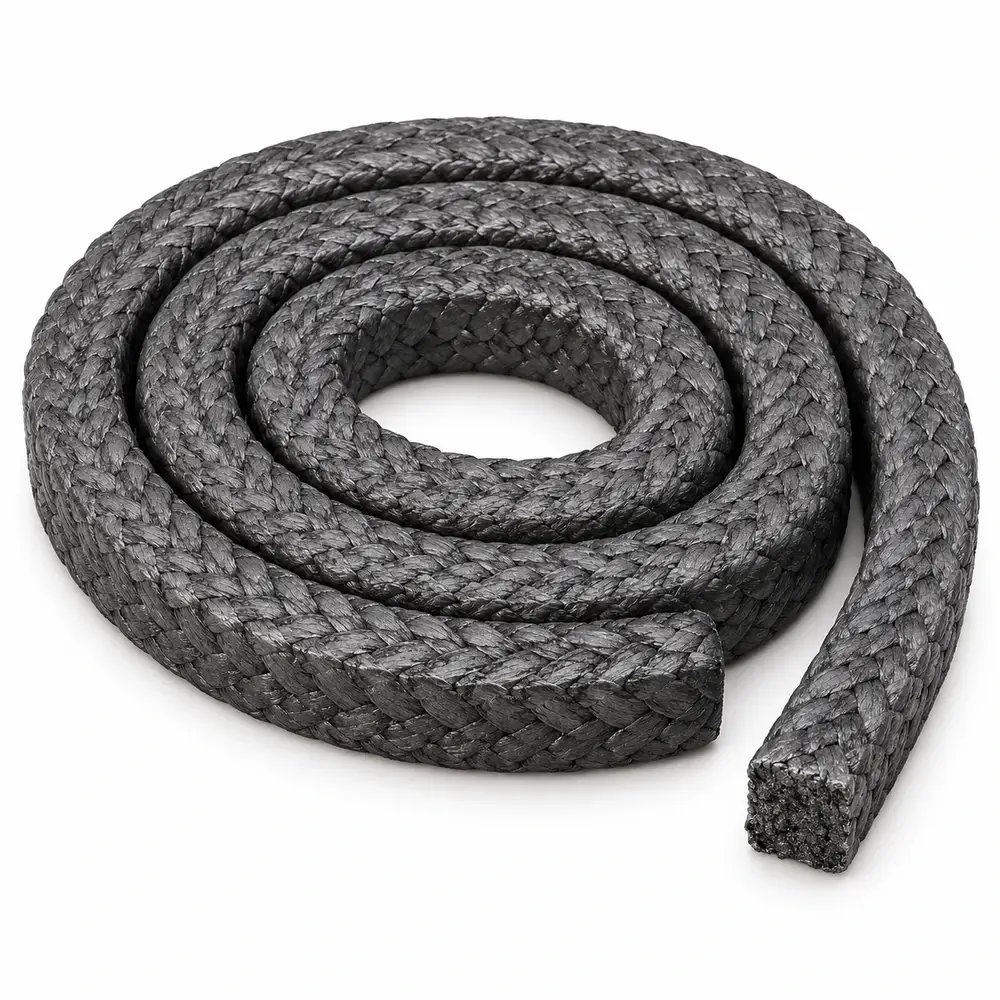
Is Expanded Graphite Packing Electrically Conductive? For a maintenance planner standing beside a solvent pump, the question is practical, not academic: if static charge builds on a dry shaft or a non-conductive packing, a small spark can become a downtime event, an inspection finding, or a safety review item. The short answer is yes—expanded graphite packing is generally electrically conductive because graphite has delocalized electrons that can move through the graphitic structure. The useful answer is more precise: conductivity depends on graphite purity, expansion and exfoliation quality, braiding density, impregnation or coating chemistry, contact pressure against the shaft and housing, and the grounding path around the stuffing box. A high-purity expanded graphite packing with minimal non-conductive additives can dissipate static charge when installed correctly, but it is not a substitute for a copper conductor or a designed grounding strap. Procurement teams should ask for conductivity data, confirm the test method, and match the packing grade to temperature, pressure, pH, shaft speed, and media. In this guide, Ningbo Kaxite Sealing Materials Co., Ltd. explains where conductive expanded graphite packing fits, how to specify it, and how to avoid a false sense of protection from a datasheet word alone.
Pain point: A procurement officer sees “electrically conductive expanded graphite packing” in a quotation and assumes the static problem is solved, yet maintenance still finds isolated shafts, painted housings, or non-conductive impregnation blocking the discharge path. The result is a documentation argument after the packing is already in stock.
Solution: Treat conductivity as a system property, not a single word on a datasheet. Expanded graphite packing can be electrically conductive, but the purchase specification should define graphite purity, additive chemistry, braid density, installation compression, and the grounding method. For static dissipation, ask for surface or volume resistance data using a stated test fixture and pressure. Then confirm that the stuffing box, gland, and nearby equipment have a reliable path to ground.
| Parameter | What it controls | Procurement check |
|---|---|---|
| Graphite purity and ash | Electron pathways through the graphitic structure | Request carbon content, ash content, and typical values by lot |
| Impregnation or coating | Can improve sealing but may reduce electrical contact | Ask whether the additive is conductive, non-conductive, or unspecified |
| Braid density and construction | Contact between graphite flakes and the shaft/housing | Request density range, braid style, and recommended compression |
| Grounding path | Routes static charge away from the stuffing box | Specify grounding ring, strap, or bonded housing requirements |
| Test method | Makes resistance values comparable between suppliers | Ask for fixture type, probe spacing, contact pressure, and units |
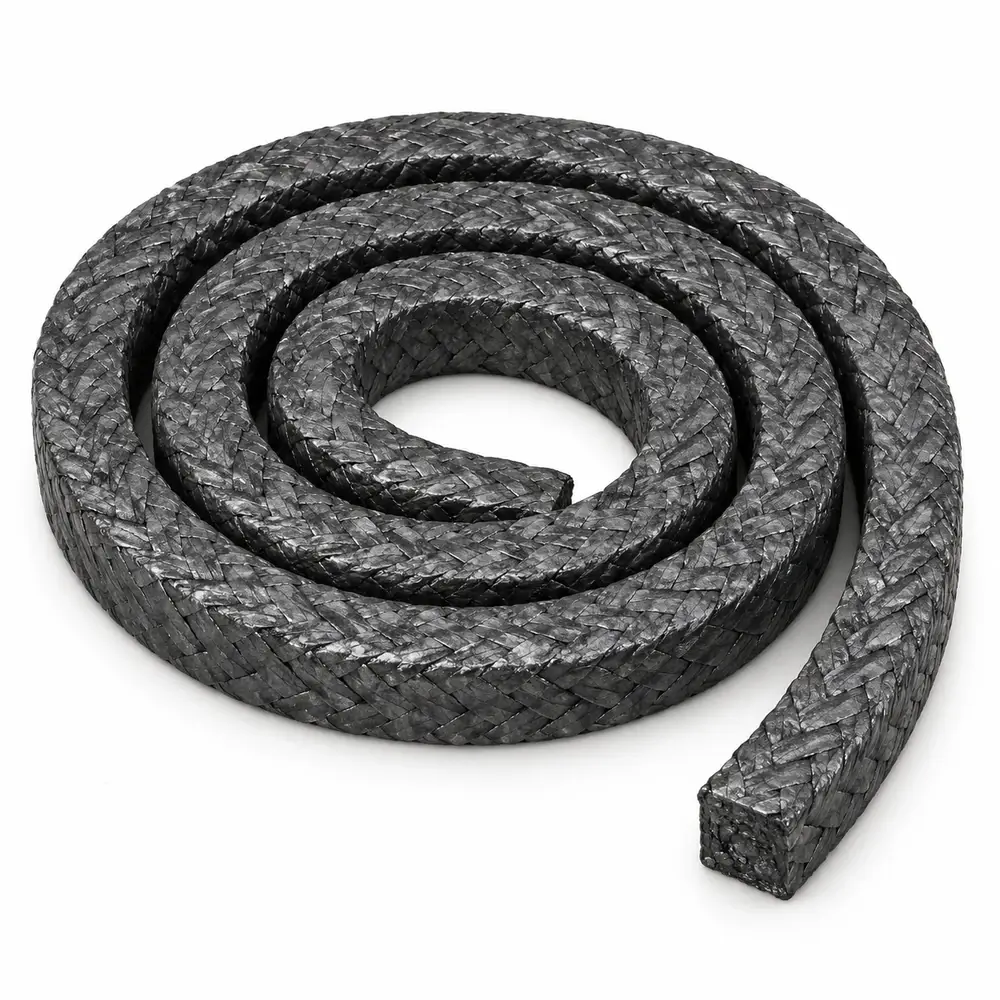
Pain point: A plant replaces a premium graphite packing with a lower-cost braided product, then discovers that the new packing contains a heavy non-conductive lubricant or resin that interrupts electrical contact. The pump runs quietly, but the static-control assumption is no longer supported.
Solution: Start with the material mechanism. Expanded graphite is made by intercalating and exfoliating natural graphite, which leaves a worm-like structure that can be compressed into flexible graphite. The delocalized pi electrons in graphite allow electrical conduction along the basal planes. In a braided packing, conduction depends on how well those graphite surfaces touch one another and how well the packing contacts the metal hardware. High ash, non-conductive binders, PTFE dispersion, excessive lubricant, and oxidation at high temperature can reduce performance. A procurement specification should separate sealing requirements from electrical requirements so the supplier cannot trade one for the other without disclosure.
| Factor | Effect on conductivity | Specification to request |
|---|---|---|
| Exfoliation quality | Better expansion can create more contact area and fewer dead zones | Typical expansion ratio and bulk density range |
| Ash and impurities | High ash may interrupt graphite-to-graphite contact | Maximum ash content and test standard |
| Binders and lubricants | Non-conductive additives can raise resistance | Full additive description and conductivity impact statement |
| Compression set | Loss of contact pressure can increase resistance over time | Recommended gland torque and re-torque procedure |
| Temperature oxidation | Surface oxidation may change electrical behavior in hot service | Maximum temperature and atmosphere limits |
Pain point: A chemical plant transfers flammable solvents through a pump with a dry-running risk, and the maintenance team is asked to prove that the stuffing box is not an ignition source. A standard packing may seal well but gives the safety reviewer no conductivity evidence.
Solution: Use conductive expanded graphite packing where static accumulation is credible and where the packing can be part of a grounded sealing system. Typical examples include solvent pumps, hydrocarbon valves, dry gas service, and high-temperature equipment where graphite’s thermal stability is already valuable. Do not use packing as a current-carrying conductor. The goal is controlled dissipation of static charge, supported by grounding and inspection. For food, pharmaceutical, or clean-media service, confirm that the conductivity additive and lubricant are acceptable for the process before selection.
| Application | Static or conductivity concern | Practical recommendation |
|---|---|---|
| Solvent transfer pump | Flammable vapor and dry shaft friction | Conductive graphite packing plus grounding check |
| Hydrocarbon valve stem | Charge buildup during cycling | Conductive packing, proper gland pressure, and inspection |
| Dry gas or low-lubricity service | Friction heat and static risk | Select grade by temperature, pressure, and shaft speed |
| High-temperature flue or thermal oil | Graphite stability is needed, but oxidation matters | Confirm atmosphere limits and conductive grade |
| Clean-media equipment | Additive compatibility may outrank conductivity | Request compliance data before approving the grade |
Pain point: An RFQ asks only for “expanded graphite packing, conductive” and receives offers that cannot be compared. One supplier reports surface resistance, another reports volume resistance, and a third provides no test conditions at all. The purchasing decision becomes a price comparison instead of an engineering comparison.
Solution: Write the RFQ around operating conditions and verification. Include shaft diameter, media, temperature, pressure, pH, shaft speed, pump or valve type, and the required conductivity target. Ask for a datasheet, a test method statement, and a sample for incoming inspection. If the packing is for static dissipation, state that the supplier must identify any non-conductive impregnation. Ningbo Kaxite Sealing Materials Co., Ltd. can review these inputs with the buyer and match the packing construction to the application rather than to a generic catalog page.
| RFQ item | Typical request | Why it matters |
|---|---|---|
| Temperature | Continuous and peak values | Sets graphite grade and oxidation risk |
| Pressure | Operating and design pressure | Affects density, braid, and gland load |
| pH and media | Chemical name and concentration | Confirms additive compatibility |
| Shaft speed | RPM and surface speed | Supports friction and wear selection |
| Conductivity | Resistance limit and test method | Creates an auditable acceptance criterion |
| Grounding | Ring, strap, or bonded housing requirement | Completes the static dissipation path |
Pain point: A buyer receives a certificate that says “conductive” but cannot reproduce the result in the warehouse or on the installed pump. Without a defined method, incoming inspection becomes subjective, and maintenance cannot tell whether installation changed the electrical path.
Solution: Use a practical verification plan. For incoming inspection, test a representative sample under controlled compression and record the fixture, probe spacing, and resistance range. After installation, check continuity from the gland to the grounded housing and inspect for paint, gasket, or corrosion barriers. Re-check after initial run-in because compression and temperature can change contact resistance. Keep the records with the packing batch and the equipment tag.
| Verification step | Method | Acceptance note |
|---|---|---|
| Incoming sample | Resistance test with defined probe pressure | Compare with supplier datasheet and RFQ limit |
| Installed continuity | Check gland, housing, and grounding strap path | No insulating paint or loose connection |
| Run-in check | Repeat continuity after temperature stabilization | Record any change from baseline |
| Batch traceability | Link test record to packing size and lot | Supports audits and future replacement |
Pain point: The safety team asks whether conductive packing alone can prevent ignition in a solvent pump. A simple “yes” is tempting, but it may overlook grounding, dry running, and installation quality.
Solution: Conductive expanded graphite packing can help dissipate static charge, but it should be one layer of protection. The pump shaft, gland, housing, and piping need a verified grounding path. The packing must be installed at the correct compression and kept free of non-conductive contamination. If the process can run dry or generate high friction, address that condition directly rather than relying on packing conductivity alone.
| Buyer question | Direct answer | Procurement action |
|---|---|---|
| Does conductive packing stop all static sparks? | No; it supports dissipation when grounded and correctly installed | Require a grounding check and installation procedure |
| Is every expanded graphite packing conductive? | Graphite is conductive, but additives and construction can reduce the effect | Ask for conductivity data and additive disclosure |
| Can I use it in flammable solvent service? | It can be considered with a full safety review | Match grade to media, temperature, pressure, and speed |
Pain point: A maintenance team installs conductive packing but leaves the gland isolated by a non-conductive gasket or painted surface. The packing may pass a bench test, yet the installed system has no reliable discharge path.
Solution: Plan the grounding path as part of the packing selection. A grounding ring or strap may be needed where the gland is isolated, and continuity should be checked after assembly. In some equipment, the housing and gland provide sufficient contact, but that assumption should be verified rather than inherited from a previous installation. Document the path and include it in the maintenance procedure.
| Question | Practical answer | What to specify |
|---|---|---|
| Can packing work without a grounding ring? | Sometimes, if the gland and housing are reliably bonded | Continuity check and clean contact surfaces |
| When is a grounding ring preferred? | When the gland is isolated or the equipment is sensitive | Ring material, fit, and installation location |
| How often should continuity be checked? | At installation and during planned maintenance | Add the check to the equipment checklist |
Pain point: Buyers often need a packing that seals well, survives aggressive conditions, and provides documented conductivity for safety review. Generic catalog data rarely answers all three needs, and an incorrect grade can create rework after shutdown.
Solution: Ningbo Kaxite Sealing Materials Co., Ltd. supports procurement and maintenance teams with application review, packing grade selection, custom sizes, and export-ready documentation. The team can discuss expanded graphite packing for electrically conductive service, clarify additive and impregnation details, and help buyers define the RFQ items that matter. This reduces the risk of ordering a packing that meets a price target but fails the static-control or sealing requirement.
| Support area | Buyer benefit | Procurement result |
|---|---|---|
| Application review | Matches grade to media, temperature, pressure, and speed | Fewer trial-and-error orders |
| Conductivity discussion | Clarifies test method and additive effects | Better RFQ wording and vendor comparison |
| Custom packing sizes | Fits specific shaft and valve dimensions | Less cutting waste and installation error |
| Documentation support | Provides data for internal safety and quality review | Faster approval and audit readiness |
Bring your shaft diameter, media, temperature, pressure, pH, shaft speed, and conductivity target to Ningbo Kaxite Sealing Materials Co., Ltd.; the team can review the application, recommend an expanded graphite packing grade, and discuss test documentation before you issue a purchase order. Ningbo Kaxite Sealing Materials Co., Ltd. supports procurement and maintenance teams with sealing material selection, custom packing sizes, data sheets, and export-ready supply through https://www.vegetable-fiber-packing.com. Send your operating conditions and sample request to [email protected] for a practical review.
Celzard, A., Marêché, J. F., & Furdin, G. (2005). Modelling of exfoliated graphite. Progress in Materials Science, 50(1), 93–179.
Chung, D. D. L. (2002). Review of graphite. Journal of Materials Science, 37(1), 1–16.
Zheng, W., & Wong, S. C. (2003). Electrical conductivity and dielectric properties of PMMA/expanded graphite composites. Composites Science and Technology, 63(2), 225–235.
Chen, G. H., Wu, D. J., Weng, W. G., & Yan, W. L. (2003). Preparation of polymer/graphite conducting nanocomposites by intercalation polymerization. Journal of Applied Polymer Science, 89(9), 2412–2417.
Li, J., Lu, Y., & Wu, Y. (2011). Effect of expanded graphite on the electrical and mechanical properties of polymer composites. Journal of Composite Materials, 45(18), 1893–1901.
Zhang, X., Wang, L., & Liu, Y. (2018). Tribological properties of expanded graphite packing under high-temperature conditions. Tribology International, 121, 1–9.
Wang, Q., Li, H., & Chen, J. (2016). Friction and wear behavior of flexible graphite packing in pump sealing applications. Tribology Transactions, 59(4), 685–693.
Kang, F., & Zheng, Y. (2014). Electrical and thermal properties of expanded graphite reinforced composites. Carbon Letters, 15(3), 157–164.
Liu, P., Zhang, Y., & Sun, X. (2019). Static dissipation and grounding considerations for graphite-based sealing materials. Journal of Loss Prevention in the Process Industries, 62, 103–112.
Park, S. J., & Kim, B. J. (2017). Surface and volume resistivity of compacted expanded graphite under compression. Journal of Industrial and Engineering Chemistry, 48, 125–132.